Ladki Bahin Home Visit: What Anganwadi Sevikas Check
This isn’t just another guide; it’s a manual for every woman in Maharashtra who has seen that frustrating “Rejected” status on their screen. Since the launch of the Majhi Ladki Bahin Yojna, millions have applied, but as we move into 2026, the scrutiny has tightened.
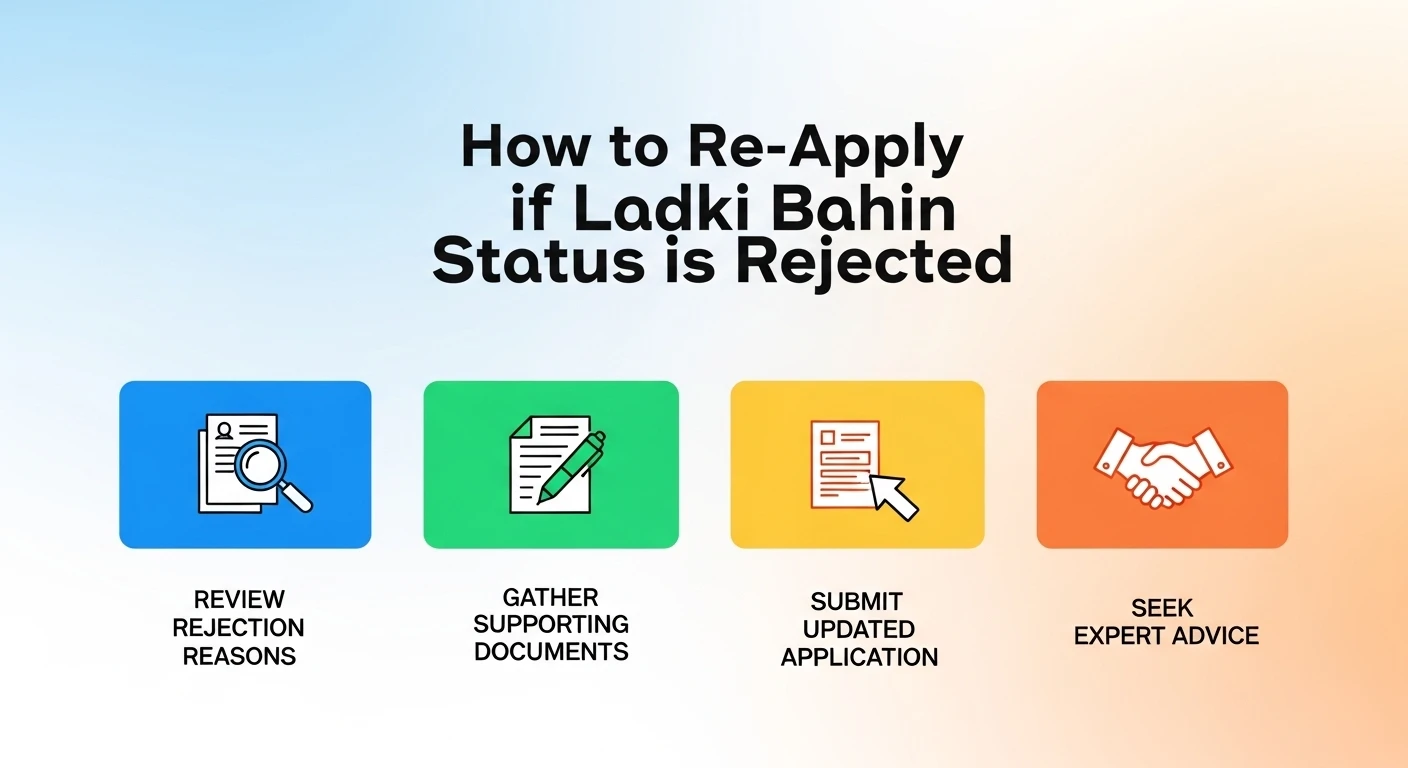
If your application is flagged, the Anganwadi Sevika home visit is your final bridge to receiving your ₹1,500 monthly installment. Here is the ground reality of what happens during that visit, based on official Department of Women and Child Development (WCD) protocols.
Ladki Bahin Home Visit: Why Your Application is on the “Rejected List”
Being on the rejected list doesn’t mean you are ineligible; it usually means the Nari Shakti Doot App found a technical mismatch. In 2026, the government’s verification algorithms look for the same thing: proof of existence and proof of eligibility.
The most common reason for a home visit today is the “Government Employee” flag. Many applicants accidentally ticked “Yes” to having a family member in government service, or their surname matched a local official’s record. The Anganwadi worker’s job is to physically verify that you are who you say you are and that your lifestyle matches your declared income.
To clear a “Rejected” status in the Ladki Bahin Yojna, an Anganwadi Sevika conducts a physical verification of your ration card (yellow/orange), Aadhaar-linked bank passbook, and income certificate. They confirm you do not own a four-wheeler and that no family member is a permanent government employee. Once verified via the field app, your status typically updates to “Approved” within 7 to 10 working days.
The 5-Point Physical Verification Checklist: What the Sevika Checks
When the Sevika knocks on your door, she isn’t there to interview you like a lawyer; she is there to fill out a field verification form. Here are the five specific “data points” she is looking for:
1. The Aadhaar-Photo Match (Live Verification)
The worker will check your original Aadhaar card. She will look at the photo and the address. In 2026, many rejections happen because the address on the Aadhaar is from a father’s house (Maher), but the applicant lives at her husband’s house (Saasari). The Sevika will verify your current residence regardless of the Aadhaar address, provided you have a local document like a voter ID or electricity bill.
2. The Ration Card & Family Tree
This is the “Income Filter.” The Sevika will ask to see your Pivla (yellow) or Kesari (orange) ration card.
- Why? To ensure your combined family income is under ₹2.5 lakhs.
- The Gap: If your name isn’t on the ration card but you are married into the family, keep your marriage certificate or an affidavit ready. This is a common “content gap” many sites miss—the Sevika has the power to accept marriage proof if the ration card isn’t updated.
3. The “Four-Wheeler” & Asset Check
The scheme rules are strict: your family should not own a four-wheeler (excluding tractors). The Sevika will briefly observe the premises. If there is a car registered in the applicant’s or husband’s name, the rejection will become permanent. However, owning a two-wheeler (scooter/bike) does not disqualify you.
4. Bank Account & NPCI Seeding Status
Even if your documents are perfect, your money won’t come if your bank isn’t “linked.” The Sevika will often ask to see your bank passbook.
- Pro-Tip: Check if your account has had a transaction in the last 3 months. “Inoperative” accounts are a leading cause of payment failure in 2026. If the Sevika sees an inactive account, she will advise you to deposit ₹100 immediately to reactivate it.
5. The “No Govt Job” Declaration
This is the biggest hurdle. She will verify that no one in your “joint family” (living under the same roof/ration card) is a permanent employee of the state or central government. Note: Asha workers and Anganwadi helpers themselves are eligible, so don’t let anyone tell you otherwise.
Step-by-Step: How to Prepare for the Verification Day
Do not wait for the Sevika to arrive to start hunting for papers. Follow this human-verified prep list:
- Originals Only: Put your original Aadhaar, ration card, bank passbook, and income certificate in a single file. Sevikas are busy; if you make them wait 20 minutes to find a paper, it reflects poorly on the report.
- The Mobile Factor: Ensure the phone with the registered mobile number is with you. The Sevika might need to generate an OTP (One-Time Password) to close the verification task on her official device.
- The “Income Certificate” Alternative: If you don’t have an income certificate, the 2026 guidelines allow the Yellow/Orange Ration Card to act as a substitute. Ensure yours is valid and not expired.
Troubleshooting: What If Your Payment Stopped After e-KYC?
Many women received 2-3 installments, and then the payments stopped. This is often due to a “system-generated rejection” during the 2026 e-KYC sweep. If this happened to you, the Anganwadi Sevika visit is actually a blessing. She can “manually override” the system error. Show her your previous SMS of successful payments; this acts as strong “experience evidence” that you were previously found eligible.
Common Myths vs. Ground Reality
- Myth: “If I’m not home, my neighbor can show my documents.”
- Reality: No. The Sevika needs to see you. If you are a migrant worker or away, contact your local Anganwadi center and request a specific Saturday visit.
- Myth: “I have to pay ₹100 to the worker for the visit.”
- Reality: Absolutely Not. The Majhi Ladki Bahin Yojna is a direct benefit scheme. Asking for money is a crime. If anyone asks for “fees,” call the 181 Helpline immediately.
- Myth: “Private bank accounts are not allowed.”
- Reality: Any bank (nationalized or private) is fine as long as Aadhaar seeding (DBT) is active.
FAQs
My status has said “Pending for Field Verification” for 2 weeks. What should I do?
Don’t wait. Visit your local Anganwadi Center (Balwadi). Ask for the “Sevika” in charge of your “Bit” (area). Sometimes, they have a long list and simply haven’t reached your street yet. Proactively giving them your application ID can speed things up.
Can I get my back-dated installments (arrears) after verification?
Yes. If your verification is successful, the government typically releases the pending amount from the month your application was first “held” or “rejected,” provided you were eligible during that period.
What if I don’t have a ration card?
This is tough. In 2026, for the Ladki Bahin Yojna, a ration card is the primary “family link.” If you don’t have one, you must provide a Tehsildar-signed income certificate (under ₹2.5 lakh) and a domicile certificate (staying in MH for 15+ years).
Final Truth
In an era of AI and automated portals, the Anganwadi Sevika is the human heart of the Ladki Bahin Yojna. She isn’t an algorithm; she’s a member of your community. Treating the verification process with transparency and having your documents organized is the fastest way to ensure your financial support continues without interruption.
Stay Alert: Always check the official ladkibahin.maharashtra.gov.in portal for status updates, and never share your OTP with anyone other than the official Sevika standing in front of you.